


Is There a Training Crisis Looming in Floristry?

Updated: May 7
There is no doubt that the landscape of training provision in floristry has changed in my career and in my opinion, we could soon be facing a real crisis in the training available for those new to the industry.

I was bench trained, learning from a whole bevy of amazing florists, ranging from those a few years older than me to those who were decades older. This meant my education included some real old school techniques as well as more modern ones, well modern for the 1980s! At the time, the choices of training were bench training on an apprenticeship (often YTS) paying £27 a week or going full time to college for more formal training.
Training is arguably easier to access than it has ever been, but with the changing face of the industry, elements of it are much harder. Bench training is becoming increasingly difficult to find as, post-Covid, many shops have closed and the florists have decided to work from a home studio or an industrial unit and forgo the high street shop. Many florists’ businesses are now event-only, so cannot provide the whole range of skills from gift work through to funerals and weddings, that a broad training requires.
The number of colleges actually offering land-based skills has decreased so this often means students are travelling long distances to access college-based training and the fees for courses are high. Add to that the need to access 150 hours of work experience in fewer shops, it makes it a real commitment for students, who are often older with family and work commitments already.
That leaves private courses, both online and in person. One of the leading providers of online courses Kays Flower School has just been accredited by the BFA as a training provider, marking I believe a change in attitude towards online provision. Many mainstream colleges and flower schools are also offering online courses. Students need to do their due diligence when it comes to private course, which are unregulated, so it is easy to part with a lot of money with no guarantees of the quality of the training provided.
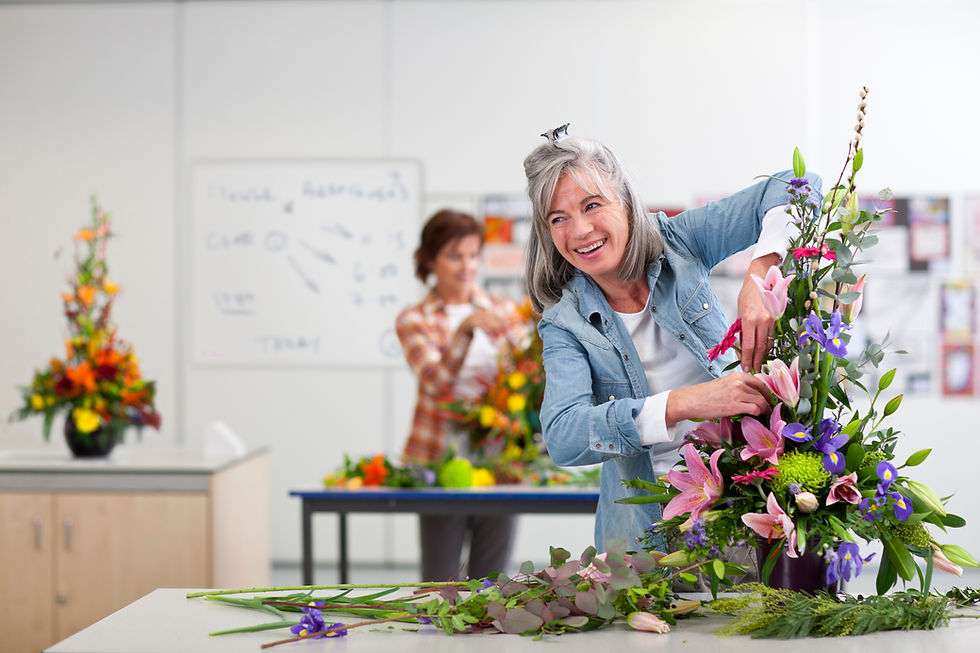
With so many hurdles it is understandable that people try to cut corners with their training, relying on self-tuition from YouTube, Instagram and TikTok. Again, the quality of provision may not be great and there is no one to correct or evaluate your work. Floristry encompasses so many skills and having spoken with some industry stalwarts they are reporting new florists having huge skills gaps, particularly around the areas of buying, costing and technical skills.
I have made the decision at the end of my career to make a move to mentor younger florists, which I do through both my Facebook group The Floristry Geek and in person. Surely as an industry we cannot complain about the self-trained offering poor workmanship and undercutting pricing, if we are not willing to help with the training of new florists, to help preserve the skills that were passed on to us? As my late English teacher once said "knowledge is only ever of value when it is shared".

Viv Bradford trained in West Germany in the late 1980s before returning to the UK, where she has pursued many roles in the industry from running retail premises, teaching floristry, working in wholesale, business coaching florists and running an award-winning studio florist specialising in weddings. Viv also created and runs Facebook group The Floristry Geek for students and those new to the industry which concentrates on educational content.







Comments