


How to Preserve and Dry Flowers and Foliage for Re-Purposing

These words are a cliché, but oh so true.
“Flowers have a way of marking life’s special moments. They celebrate birthdays and weddings, welcome new babies, comfort us during difficult times, decorate our homes and remind us that someone is thinking of us.”
Contents
Why Dry Flowers and Foliage?
The wonderful thing is that many flowers and foliage have a second life waiting for them. With a little patience, you can preserve their beauty and transform them into something completely different, something that will continue to bring joy for months, sometimes even years. This can be something to offer in your business, dried flowers, foliage and grasses.
As florists, we often celebrate fresh flowers, and rightly so. Nothing quite compares to the fragrance of freshly cut garden roses or the vibrant colours of seasonal blooms. But dried flowers have come back on trend once again, so why not make the most of this increasing trend that customers are wanting and asking for.
You can of course buy ready-dried materials, with lots of choice in varieties and colours, but if you have the time and inclination, why not dry some yourself and it will help with your stock wastage. In my experience, the secret to drying flowers successfully is to begin while they are still looking lovely. If petals have already started to brown or stems have become soft and tired, the finished result won’t be quite as beautiful. So choose flowers that are just beginning to mature, but while they are still holding their shape.
Which are the Best Flowers and Foliage to Dry?
Roses become wonderfully romantic with their soft, muted tones. Hydrangeas develop an antique appearance that interior designers adore. Lavender keeps much of its fragrance, while statice, gypsophylia and craspedia are all naturally suited to drying.
Eucalyptus is perhaps everyone’s favourite for good reason. It dries beautifully, often keeping both its elegant shape and subtle scent. Olive branches, ruscus, magnolia leaves and ferns can all become lasting features in dried arrangements. I have found that sometimes it is the foliage that brings the wow factor into a dried design.
Best Flowers | Best Foliage |
Roses | Eucalyptus |
Hydrangeas | Olive Branches |
Lavender | Ruscus |
Statice | Magnolia |
Gypsophila | Ferns |
Craspedia |
How do you Dry Flowers and Foliage?
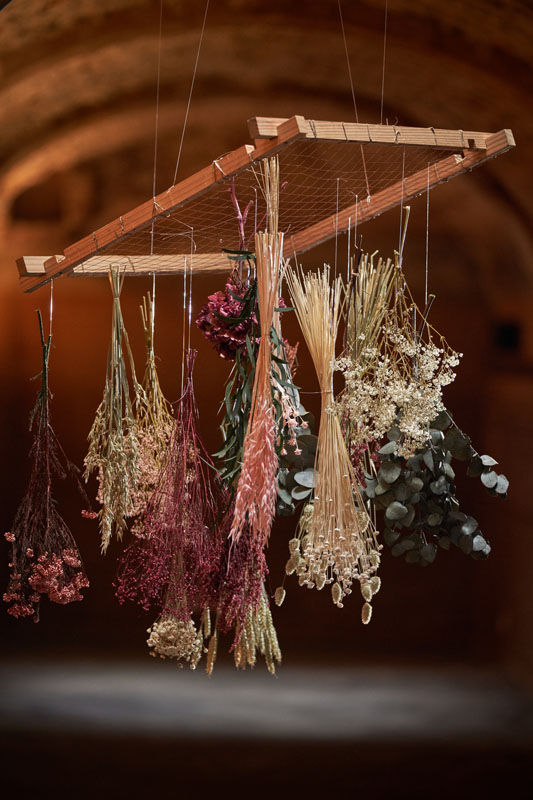
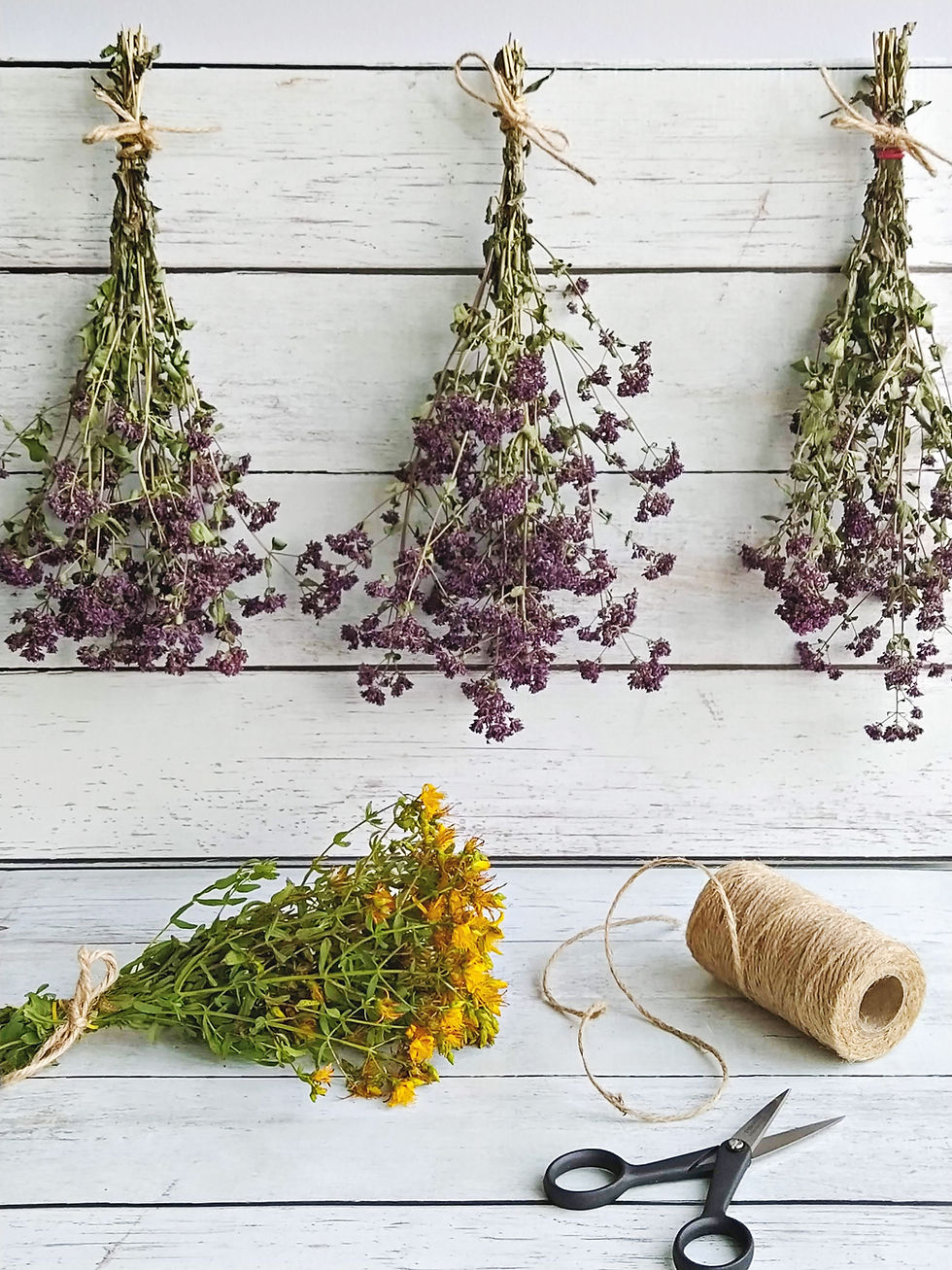
You don’t need specialist equipment to begin preserving flowers, I think that one of the oldest methods, remains one of the best. Simply remove any leaves from the lower part of the stems, gather small bunches together and tie them with twine or ribbon. Hang them upside down somewhere that’s dry, airy and away from direct sunlight. A spare stock room, an open drying rack hanging from the ceiling in your workroom or shop window or well-ventilated loft often works perfectly. Then leave them for a few weeks. Slowly the moisture leaves the stems, the petals become papery and delicate, and they are soon dried.
How to Dry Hydrangeas
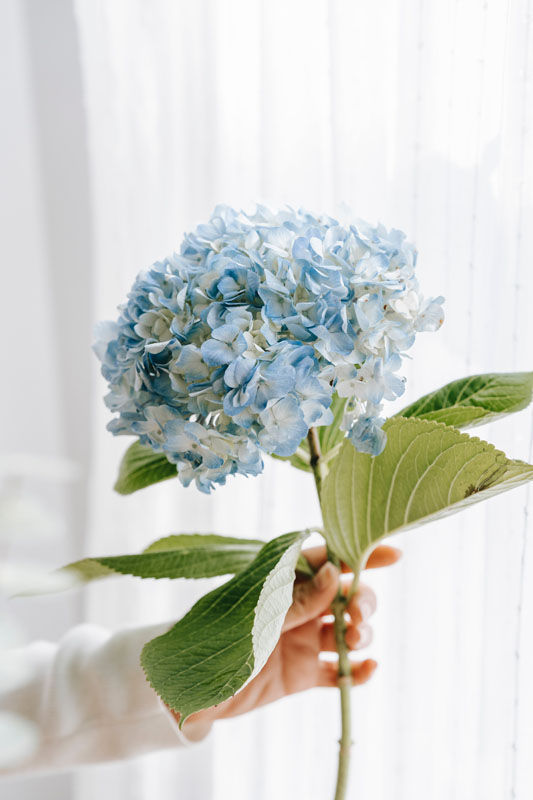
Having said all of that, I find by drying Hydrangeas slightly differently, you will get much better results. The colours soften into gorgeous vintage shades, making them perfect for Autumn displays and Christmas arrangements.
Don’t hang them upside down, instead place them in a vase with just a small amount of water and simply leave them.
Don’t top the water up, as it gradually evaporates, the flower heads naturally dry while holding their shape beautifully.
It’s one of those simple tricks that always feels like a triumph!
When to use Dried Foliage
One of the things I love most about our trends today, is how popular foliage is. Beautiful eucalyptus, olive branches, textured ferns and sculptural ruscus add movement and character to arrangements, and many dry just as well as flowers themselves. In fact, some dried foliage becomes even more beautiful over time.
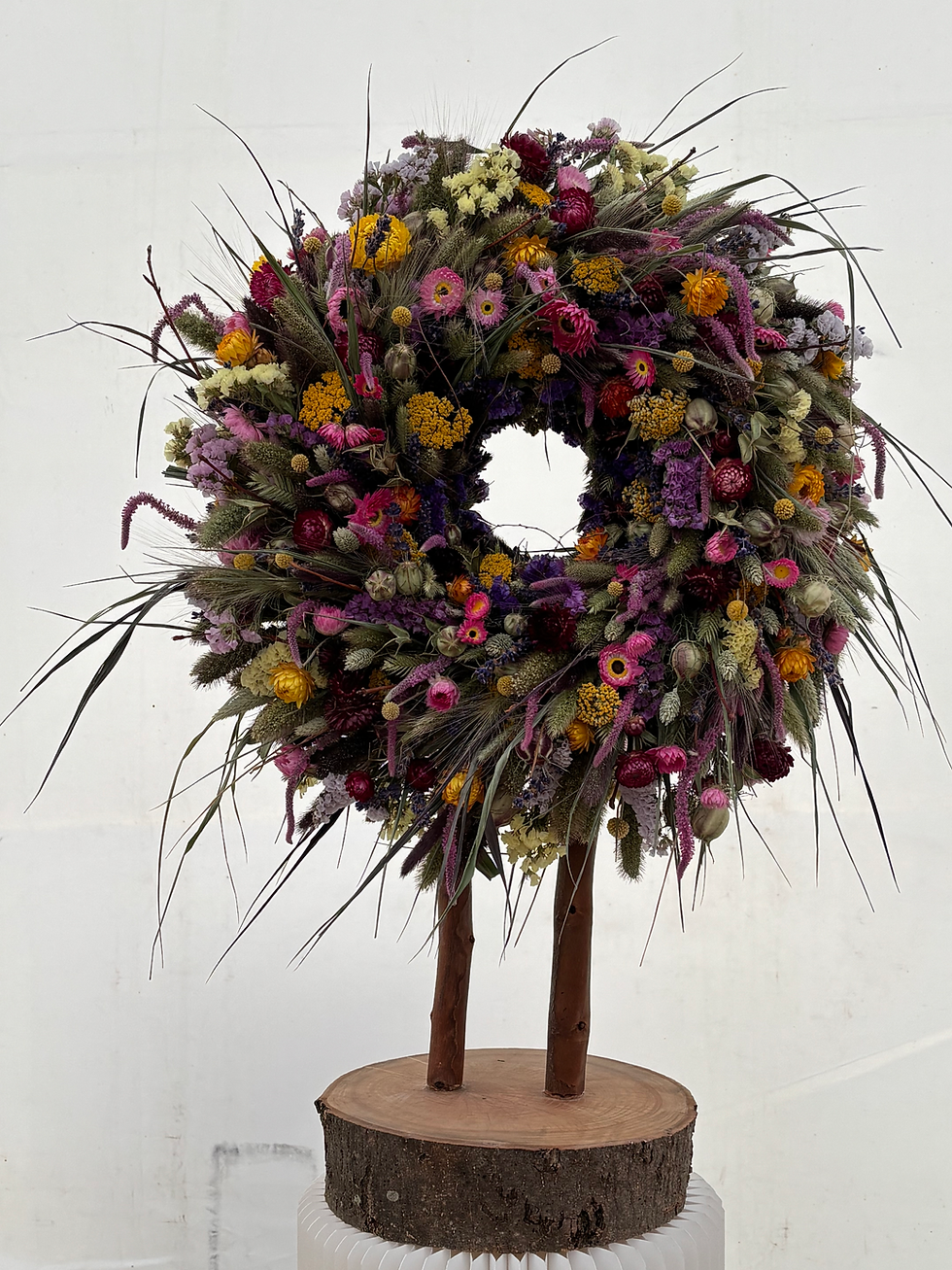
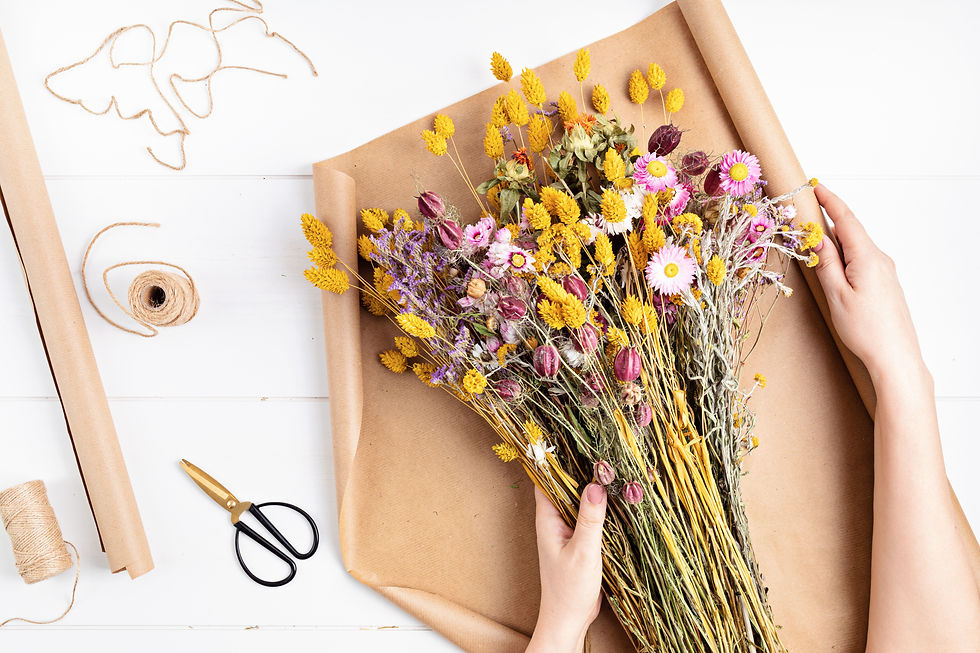
This is where the creativity really begins. Once your flowers have dried, you’ll start seeing possibilities everywhere. Perhaps you’ll arrange them into a beautiful everlasting bouquet for a customer or maybe you’ll weave them into a seasonal wreath for a client's front door, or tuck a few delicate stems around napkins for a wedding. Sometimes the simplest handful of dried grasses in a favourite ceramic vase can look stunning.
Tips to Look after Dried Flowers
Keep them away from direct sunlight, which can cause colours to fade more quickly.
Avoid placing them in damp rooms where moisture may soften the petals and cause mould and rotting.
A gentle dust every now and again with a soft brush or a cool hairdryer will keep them looking their best.
A fresh bouquet and a dried arrangement are very different, but each has its own beauty and possibilities to be enjoyed by your customers.
As our awareness of sustainability grows, preserving flowers feels more relevant than ever. So next time a vase or a bucket of flowers and foliage begin to fade, and they are past their best to sell in your shop, think if they could be dried as there may still be plenty of beauty left to sell and enjoy.

With over 35 years’ experience, Karen Barnes is one of the UK’s leading consultants to the floral industry and an expert in product development, future trends & colours, and floral photography design & planning. She’s an interior floral designer, high profile wedding and event floral planner, and prominent international competition judge.
From teaching on a one-to-one basis to coaching small, intimate classes and larger teams, Karen can encourage, motivate and mentor your next step in the florist industry. Sharing her vast experience, Karen can help you expand your knowledge and creativity.






Comments