


Primroses and Polyanthus

A familiar wildflower spotted under hedgerows and on grassy banks, the common primrose, or Primula vulgaris to give it its botanical name, is always the first plant to flower in my garden. Delicate pale lemon flowers are now starting to open, a beacon amongst what is otherwise an uninspiring border of withered perennials and wet clay.
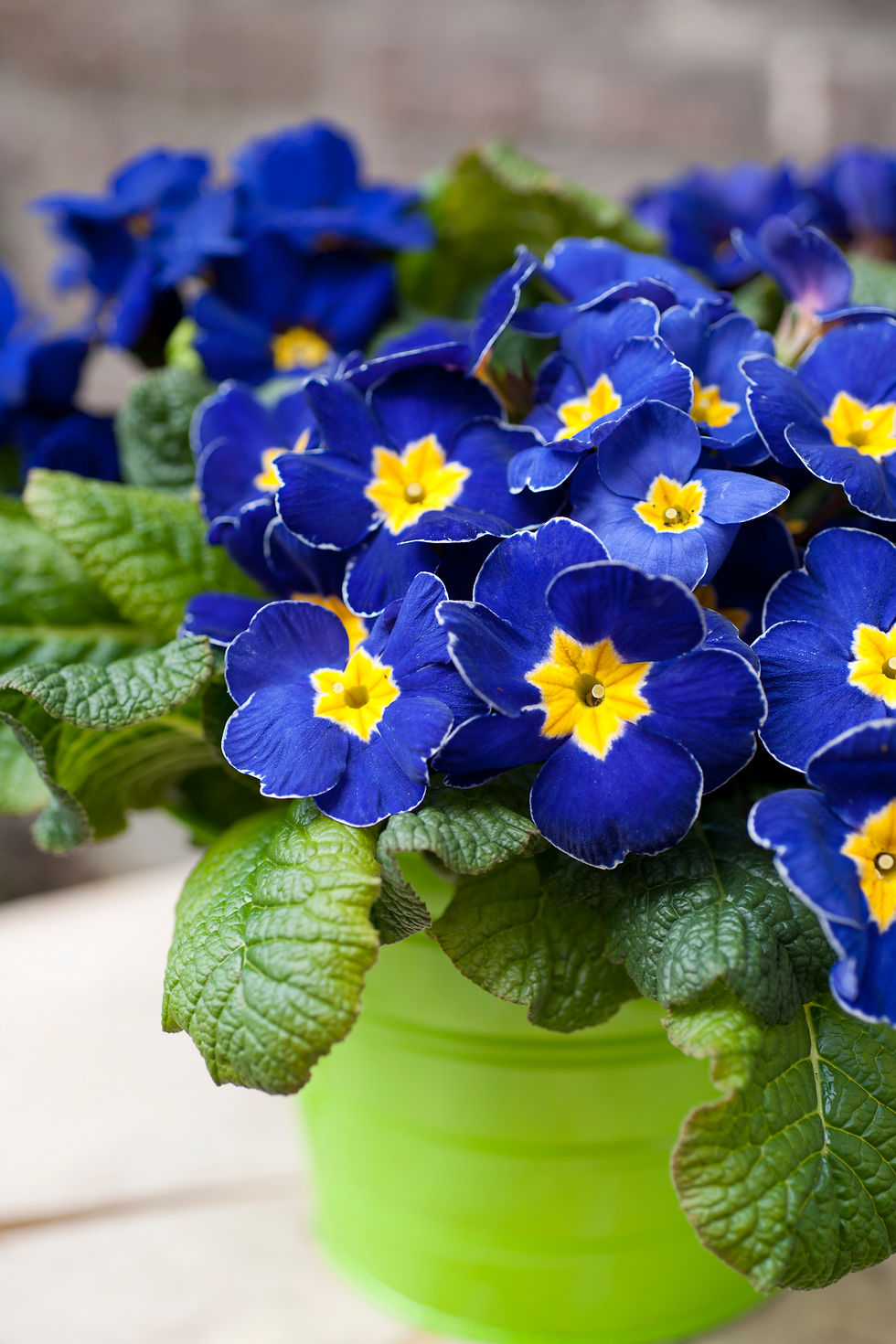
They are well named, ‘primula’ is from the Latin ‘primus’ meaning first, in this instance, first flower or as some say, ‘first rose.’ Vulgaris simply means ‘common’ and references the fact that at one time this cottage garden classic was commonplace in the countryside, less so now unfortunately. In the wild primroses are protected so it is illegal to pick them. If you're lucky enough to have them in your garden, they prefer light shade and moist, well-drained soil.
Primroses are a very versatile plant, not only are they lovely to look at, but they also taste good as well, indeed all parts of the primrose are edible. They can jazz up an otherwise dull salad, or you can make tea from the leaves, and when crystalised, primrose flowers are often used in cake decoration. Traditionally primroses were used in love potions and if you found one with six petals instead of the normal five, it was believed that would bring you good luck.
What is the difference between a primrose and a polyanthus?
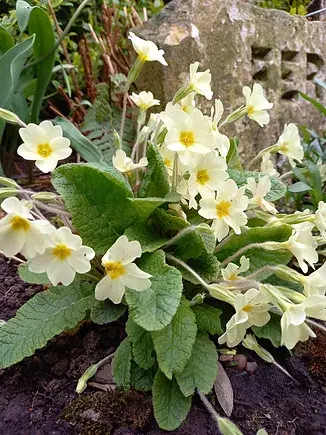
These two spring flowering plants are often mixed up. The polyanthus could be described as the primrose’s more brazen cousin. The difference is that polyanthus flowers are on a stalk and bloom above the leaves, while primroses are nestled within. Both however will add a splash of colour to pots, tubs and borders, are frost hardy and easy to grow.
Polyanthus is a natural hybrid between another wildflower favourite, the Cowslip (Primula veris) and the primrose, and although this may make it sound like a modern cross, the polyanthus has in fact, been around since the seventeenth century. As polyanthus are inexpensive, they are ideal when creating affordable planted designs.
Inspiration for presentation
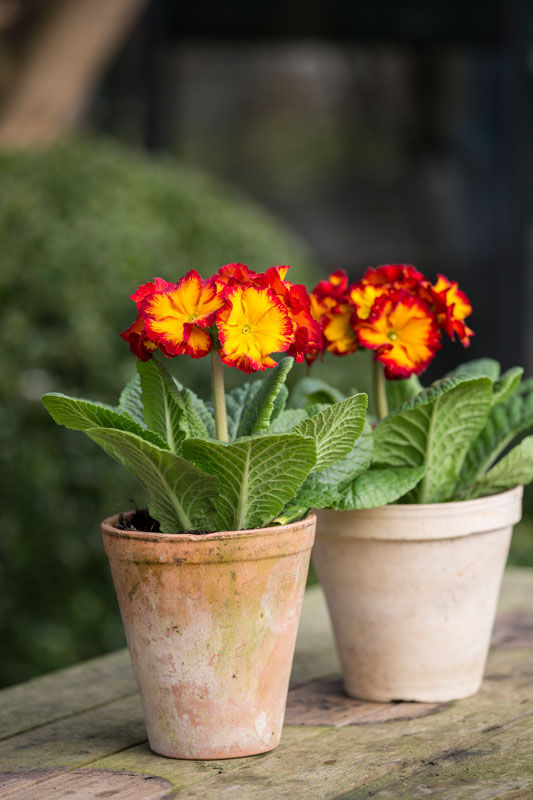
Keeping it simple. Plain terracotta pots show off the beauty of the plant.
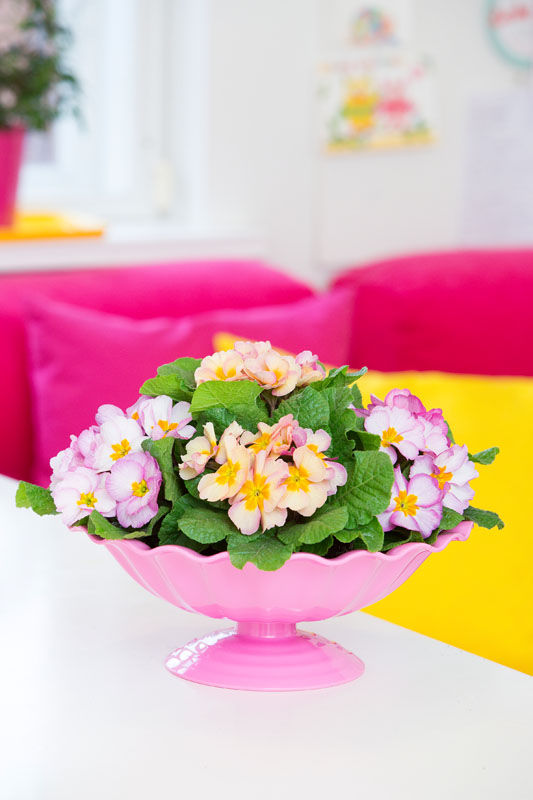
Massed together in a vintage container they make a pretty table centrepiece.
Polyanthus trio
Despite their bright appearance, when combined with the right plants Polys can be quite subtle. Create a sophisticated garden gift by theming colours and containers. Add grasses for movement and height.
So, primrose or polyanthus? Both are perfect for creating spring floral gifts with cheerful colour, just what’s needed right now to beat those winter blues.

Su Whale is a florist and freelance writer with over thirty years' experience in the floristry industry. She is the author and publisher of three best-selling books: Cut Flowers, 4th edition (2020) Cut Foliage, 2nd Edition, (2021) and Houseplants (2019), all bookshelf essentials for the professional florist.






Comments