


Tutorial: The Art of the Analogous

Paulina Nieliwocki of Blue Jasmine Floral in the USA shares her .........
When designing in an analogous fashion, I like to vary the tones within each hue to create depth and movement. The beauty of the transition lies in its subtlety. The colours flow from one to the next, guiding the eye without abrupt contrast.
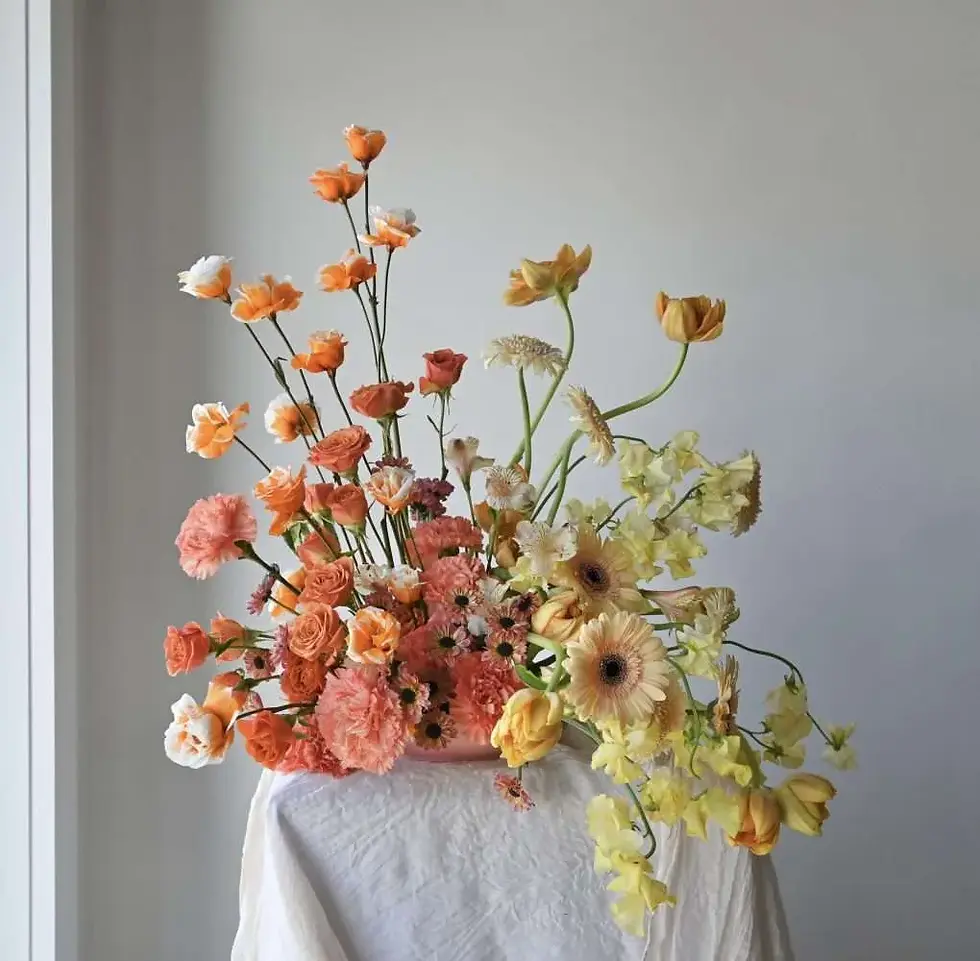
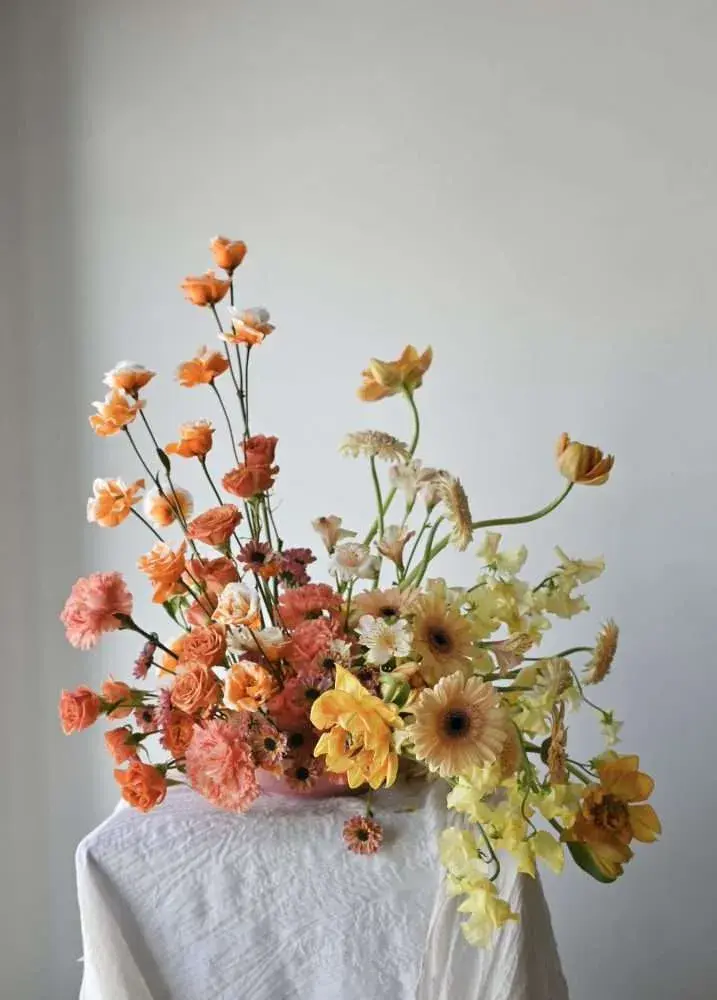
In this ombre-style arrangement, the palette moves from saturated orange with yellow undertones, to a warmer orange touched with pink, then softens into cream before finishing in yellow. The gradual shift allows each bloom to stand out while still feeling part of a cohesive whole.
Fun fact: For this centrepiece, I wanted a low-profile container. I chose an unexpected vessel—a simple salad bowl. Any shallow container will work beautifully, as long as it can hold water. This design is adaptable for both home and event styling.
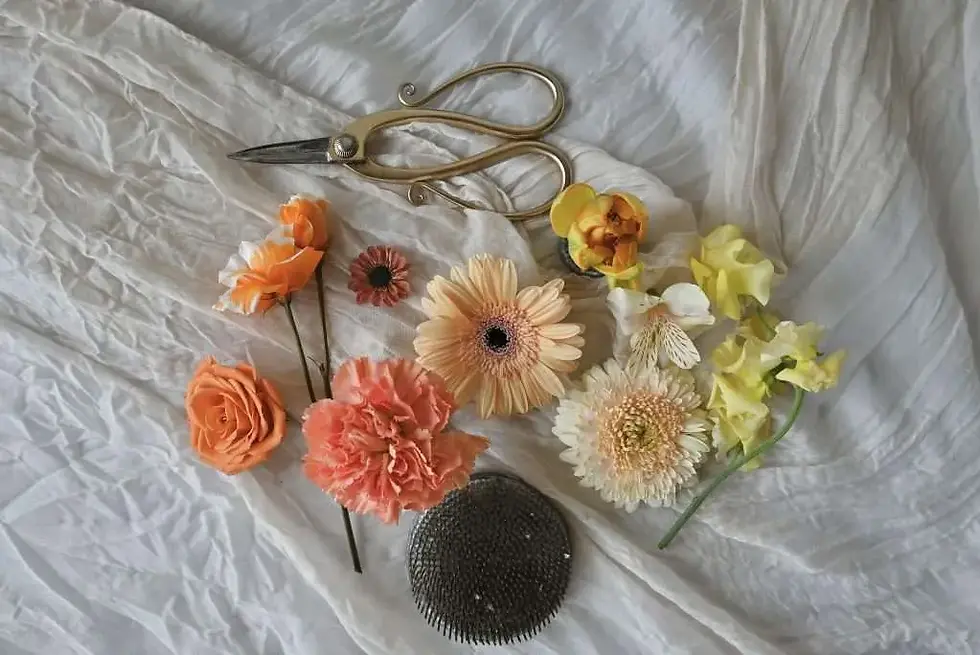
Botanical Materials
Orange Varieties
Rosa spp. ‘Orange Babe’ (spray rose).
Eustoma grandiflorum (lisianthus, prairie gentian).
Dianthus caryophyllus (carnation).
Chrysanthemum × morifolium ‘Veronica Salmon’ (cushion pompon, spray mum).
Tulipa spp. (tulip).
Pink, Peach and Cream Tones
Alstroemeria aurea/A. aurantiaca (Peruvian lily, lily-of-the-Incas)
Gerbera jamesonii (Transvaal daisy, Barberton daisy, African daisy, Veldt daisy)
Yellow
Lathyrus odoratus (sweet pea)
Hard Goods
Low-profile bowl
Pin frog
Waterproof adhesive floral putty
Step by Step
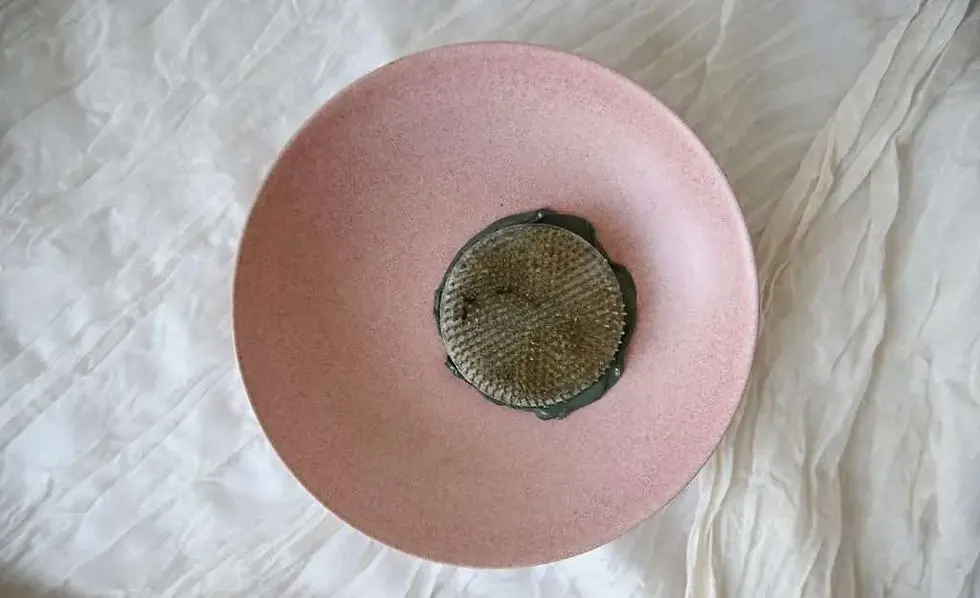
Step 1
Adhere the pin frog to your container with waterproof putty.
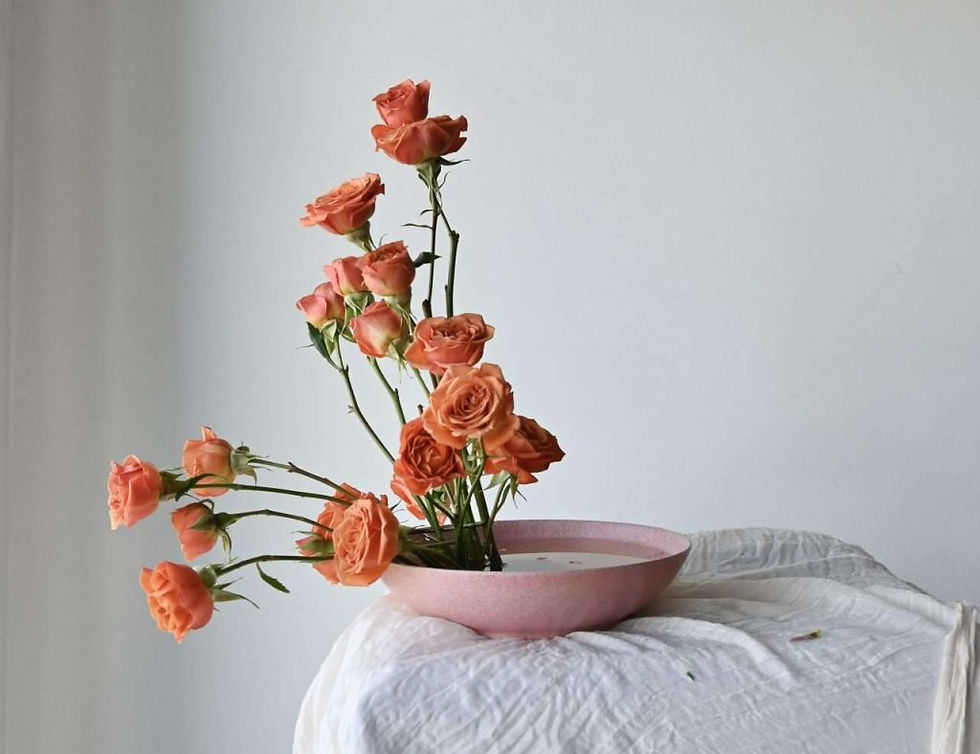
Step 2
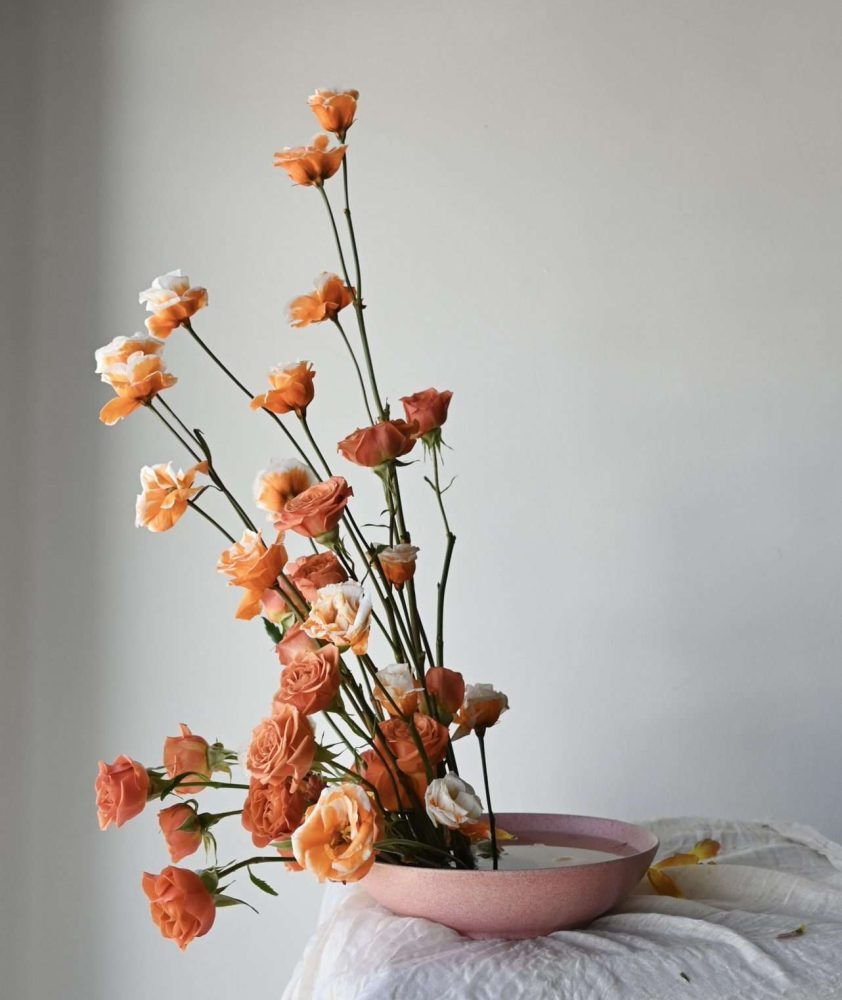
Fill the container with flower-food solution and prepare your blooms. Cut the stems of each variety at different lengths. You’ll build this design from left to right. So, to begin, envision the pin frog in thirds: the left side, centre and right side. Place the first variety of orange blooms—spray roses—on the left third of the base. Layer them to create depth and movement.
Step 3
Layer in the second variety of orange blooms, lisianthus, among the spray roses. Integrate them gradually into the left side of the arrangement and begin working toward the middle.
Step 4
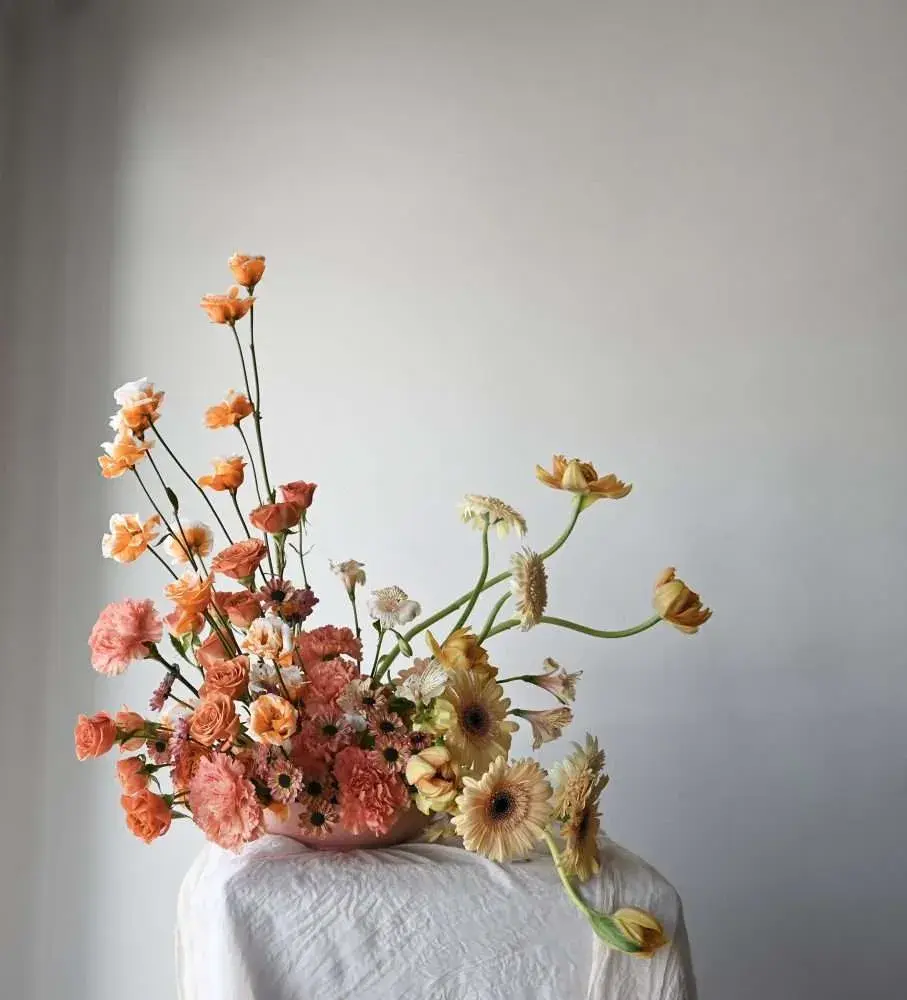
Design the centre third of the arrangement. Low at the base, add fluffy carnations. Then place the pompons and some pinkish Gerbera, slightly mixing the salmon-coloured hue with the orange to establish a colour transition. Add Alstroemeria to introduce the light creamy colour and start to pull into the right third of the design.
Step 5
Cluster the lighter-coloured Gerbera and tulips at the beginning of the final third of the design. This introduces a nice saturation of peach and will lead the eye to the final colour, yellow.
Step 6
Conclude the ombre effect. Place the sweet pea blooms to concentrate the yellow to the farthest right side of the arrangement.
Photos and Design from Paulina Nieliwocki, Blue Jasmine Floral

Florists' Review is a leading monthly trade magazine for the retail and wholesale floral industry, published since 1897. Based in Kansas USA, it serves a global audience, providing floral professionals with design inspiration, business insights, trends, and product information.






Comments