


Dyed Flowers

Dyed Flowers…Yes or no?
Love them or loathe them, dyed flowers are an established part of the vast choice of fresh materials available from wholesalers, and, as they can be conveniently dyed to suit the colours of the seasons they tend to peak in popularity round Christmas and Valentine’s Day.
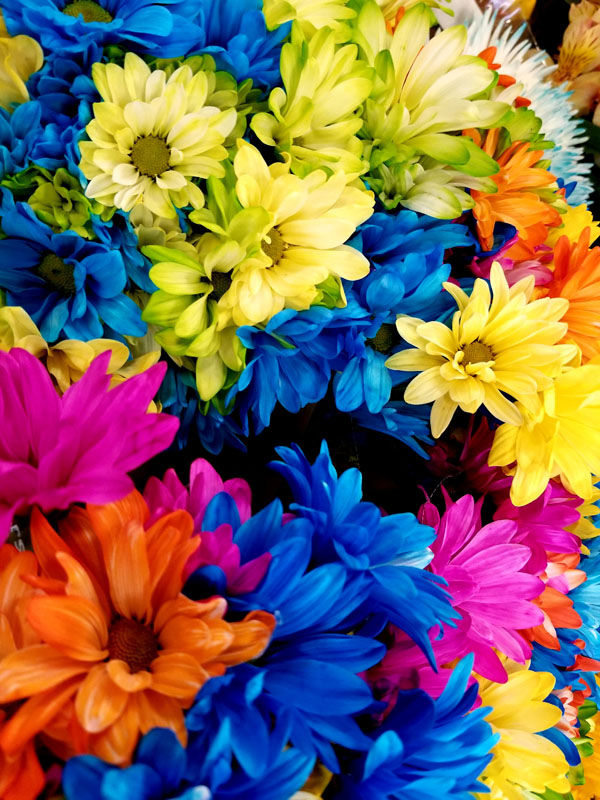
Why dye flowers?
Why indeed, when nature has done such an incredible job of providing an unrivalled spectrum of colours herself. The desire for blue flowers, more specifically blue roses, has certainly played a part, and there is something fascinating about experimenting with colour to produce a flower in an unexpected shade.
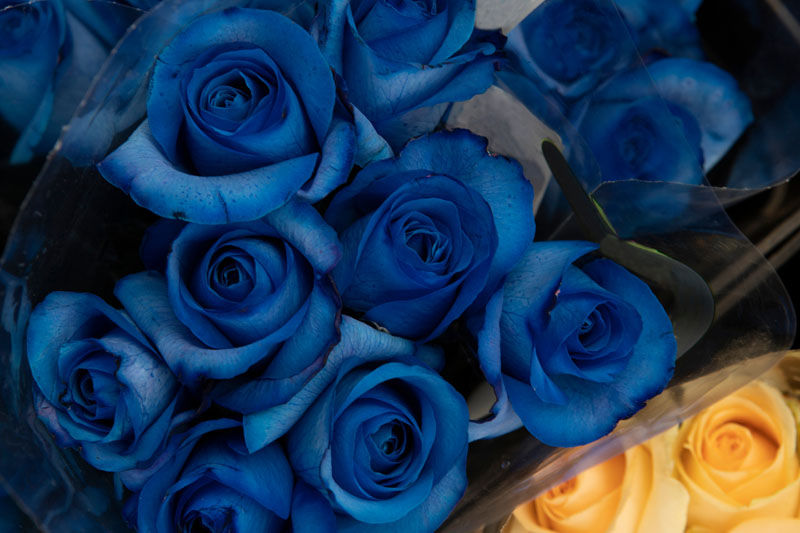
How are flowers dyed?
Flowers can be dyed by absorption; this is when they are placed in artificially coloured water and left to do what they do naturally, drawing the liquid up through the stem into their leaves and petals.
Another method is dipping flowers into coloured dyes; this works better for woody or semi-woody stemmed flowers but does make the colouring more uneven.
Most commonly dyed flowers
Practically all flowers can be dyed, although single white Chrysanthemums, due to their simple form and ability to take up water easily, are the ideal candidate. They are sold in varying, dazzling hues in multiple outlets from supermarkets to garage forecourts, which, can be argued, does nothing to recommend them to the professional florist. Dyeing flowers that are not white will produce more unexpected results as the dye reacts with the natural colour of the petals.
Rainbow roses
These are another dyed product that divides the floristry world. Popular in Europe, florists in the UK are more reserved about them – are they a welcome, modern take on the traditional rose or are they just garish and vulgar? Certainly, male customers seem very fond of them, and they sell well at Valentine’s Day. Although roses are by far the most popular rainbow product, Chrysanthemum blooms, Gypsophila, even pussy willow can get the rainbow treatment.
How does dyeing affect flowers?
Contrary to what you might think, adding dye to flowers does not drastically shorten their vase life. However, some compounds in the dye can compromise foliage, causing it to shrivel, and this in turn will affect the flowers lifespan.
Where to get flower dye
Flower dyeing kits are available from floral wholesalers and on-line, and even if you’re not enamoured about dyed flowers, it’s still worthwhile, out of interest, to try it, you never know, you might be converted!
Images Envato Elements

Su Whale is a florist and freelance writer with over thirty years' experience in the floristry industry. She is the author and publisher of three best-selling books: Cut Flowers, 4th edition (2020) Cut Foliage, 2nd Edition, (2021) and Houseplants (2019), all bookshelf essentials for the professional florist.






Comments