


Botanical Names Explained: Understanding Latin Plant Names for Florists and Students

Why Botanical Names Matter in Floristry
That is the first question that often comes to mind when faced with a complicated Latin botanical name; surely the common one is easier? But there is a very good reason why we use the Latin instead.

Why Latin Is the Universal Language of Plant Identification
Latin is a ‘dead’ language, no longer spoken, so therefore doesn’t change and evolve. That’s why it was adopted to be the international language of science, including plant biology. It gives us a single, universal naming system which is the same across the globe, thus eliminating any confusion.
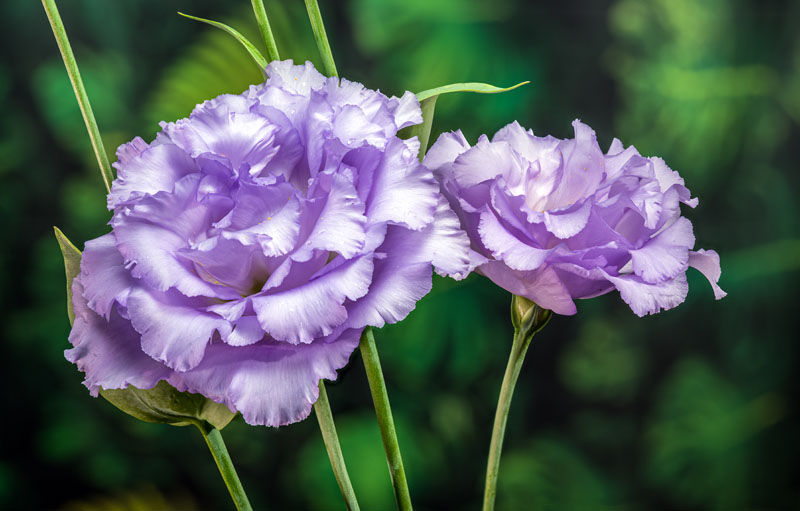
Example: Lisianthus is the common name of Eustoma used by florists in the UK and Europe. Over in the USA however, Eustoma is called the Texas bluebell or prairie Gentian; same flower, different common names. The botanical name is fixed though, meaning florists, growers and wholesalers, wherever they are in the world, will know which flower is being referred to.
How Botanical Plant Names Help Identify Flower Characteristics
Botanical names can tell us a lot about the plant or flower in question. For example, floribunda means ‘many flowering,’ so expect a lot of flowers on a stem, alba denotes a white flower, rubra, red. A flower or plant which is pendula will be weeping or hanging, while arabicum is from Arabia, i.e. the Middle East.
Understanding Genus and Species in Botanical Classification: How Latin names are composed
Generally speaking, a flower will have two names, its genus followed by its species. A genus name is like a surname, one that is shared by a whole family. The species is specific to that particular flower, like a first name which distinguishes one member of the family from another.
Asiatic lily Oriental lily Longiflorum lily
Example: Lilium is the genus name for all lilies, but florists distinguish the different lilies within that family by their species name, asiatica, oriental or longiflorum.
How to Write Botanical Names Correctly in Floristry
Latin names are always written in italics, with a capital letter for the genus, lower case for the species. This is so that they will stand out in any text, identifying them as an accepted name.
Learning Latin Plant Names: A Valuable Skill for Florists
Latin names are fascinating, and the more you learn about them, the more interesting they become and therefore the easier they will be to remember!

Su Whale is a florist and freelance writer with over Thirty years' experience in the floristry industry. She is the author and publisher of three best-selling books: Cut Flowers, 4th edition (2020) Cut Foliage, 2nd Edition, (2021) and Houseplants (2019), all bookshelf essentials for the professional florist.







Comments